

“So is the Red Sea coming back or what?”
You’ve probably fielded that question three times this week.
For about two weeks in February, the answer looked like maybe. Maersk and Hapag-Lloyd tested escorted Suez transits. A few AOG planners started penciling ocean timelines back toward pre-Houthi times.
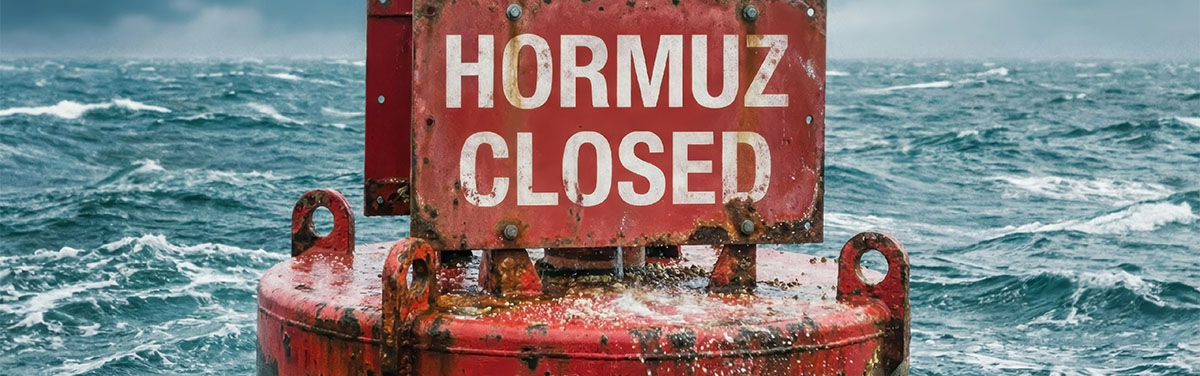
Then, carriers pulled back to Cape diversions. Again. And the Iran war pushed the conversation past the Red Sea entirely, right to the Strait of Hormuz. A fifth of global oil and LNG moves through that corridor, and right now Iran is playing toll troll, deciding who crosses based on whether they’re on the nice list.
Two corridors degraded at once. Ocean freight squeezed on one end, airfreight capacity disappearing on the other, and the engine your grounded 737 needs sitting somewhere between both problems.
So we put together five questions worth sorting out before your next AOG crisis.
Honest answer: the situation is rewriting itself faster than anyone can publish about it. Ceasefire talks one morning, more Marines deployed the next.
2026 was supposed to be the year carriers came back to the Red Sea in force. CMA CGM announced full Suez loop returns. Test voyages went through. But the Western naval effort that was supposed to secure the corridor has cost over $1 billion in weapons, lost four ships, and the shipping industry still largely avoids the route. Iran has also threatened the Red Sea directly, calling any facilities supporting the USS Gerald R. Ford carrier group potential targets.
Meanwhile, Maersk has published 14 operational updates in March alone and just rolled out a global Emergency Bunker Surcharge. That’s not a company expecting a clean reopening.
When it comes to AOG freight, the real danger is false confidence. Planning around a corridor that keeps opening and closing is worse than planning around one that stays shut.
Iran says “non-hostile” ships can transit Hormuz. Generous of them. Only 21 tankers have crossed since the war started on February 28, compared to over 100 a day before the conflict. Iran has made 21 confirmed attacks on merchant ships. War-risk insurance was pulled entirely for March 5, and most commercial shipping has stayed away since.
The U.S. launched an aerial campaign on March 19 to force the strait open. Twenty-two countries signed a statement pledging to help secure passage. But pledges don’t move freight. Transit access right now depends on cargo type, destination, and whose side you’re on, not on commercial terms that any buyer can plan around.
Near-term improvement? Possible. Near-term normality? Not close.
Everything gets worse at once. Cost, lead time, and certainty all deteriorate together.
Brent crude hit $119.50 at its March peak and sat around $99.75 March 25. That’s a $20 swing in days. Oil drives jet fuel, trucking rates, and every transport cost between your supplier and your hangar. Goldman Sachs called this the largest supply shock in decades and said crude is trading almost entirely on geopolitical risk premium right now.
Layer that on top of an aerospace supply chain already running hot. Engines remain the hardest components to source through 2026. Airlines are holding older aircraft in service roughly two extra years on average, which adds billions in maintenance and spare-parts pressure. Titanium and nickel tubing lead times still sit at 50 to 60 weeks against a 20-week pre-pandemic norm.
The Iran war didn’t create those problems. It just removed whatever slack was left.
For two years, air has been the escape hatch when ocean timelines fell apart. Red Sea bogs down, you bump the shipment to air, eat the premium, keep the fleet flying. That only works when the air network itself is healthy.
Right now, it’s not.
Middle East air cargo capacity has plunged 48% year-over-year as of mid-March, and over 27,000 flights have been canceled across Emirates, Etihad, and Qatar Airways since the conflict started. Those three carriers handle about 13% of global air cargo lift and connect roughly a quarter of all China-Europe freight.
Freighters still operating are rerouting through Central Asian hubs, which in theory should work. But it adds hours of flight time and forces lighter loads to cover extra fuel burn. Your part still gets on a plane. It just lands at a gateway 200 miles from where your ground crew was staged, because the original routing no longer exists.
That gap is where AOG recoveries get won or lost right now, and is the whole reason why expedited ground transport has become the single most important leg of the move.
Stop planning for one neat recovery path. The Iran war has made sure there isn’t one. Plan for several ugly ones instead, and build your strategy around the assumption that conditions will keep changing while you’re still executing.
Nobody can promise you a clean resolution to any of this. But you already knew that. You’ve read the data, you see the corridors degrading, and you know the aircraft doesn’t care about geopolitics. It needs the part.
That’s where we live.
Carrier 911 has built its entire operation around the moment when the original plan stops working, and someone still has to deliver. Airport recoveries at strange hours, bonded handling across borders, TSA-aware coordination, hand-carry logic, and final-mile delivery to the consignee when every normal routing has been rerouted twice. We’ve done this through many freight crises, and the Iran war version is no different. The stakes change. The job doesn’t.
Whether this cools next week or grinds on for months, your AOG team needs a provider that answers the phone, moves the part, and removes friction at every handoff. That’s us.
See a Carrier 911 demo and find out how we help AOG teams stay moving when global freight networks stop acting normally.


Get a free consultation call with one our specialists.
